
Make the area safe before documenting it
Stop using a leaking sink or connected appliance. Keep clear of wet electrical equipment and outlets. If you know the correct water shutoff and can reach and operate it safely, closing it may limit a supply leak; do not force a stuck valve or dismantle the plumbing to investigate. Get help if the source cannot be isolated.
Do not keep filling the basin to recreate a leak for the camera. Existing observations are enough to start the conversation. Photograph damage before moving dry stored items out of the way, if it is safe to do so.
Take a short, useful set of photographs
Use ordinary light and more than one angle where a connection is hidden. Do not post your address, private belongings or documents in a public photo. Send only the details needed for the inquiry.
- One wide view of the sink, cabinet opening and surrounding floor.
- A clear view of the drain basket, trap and connection entering the wall.
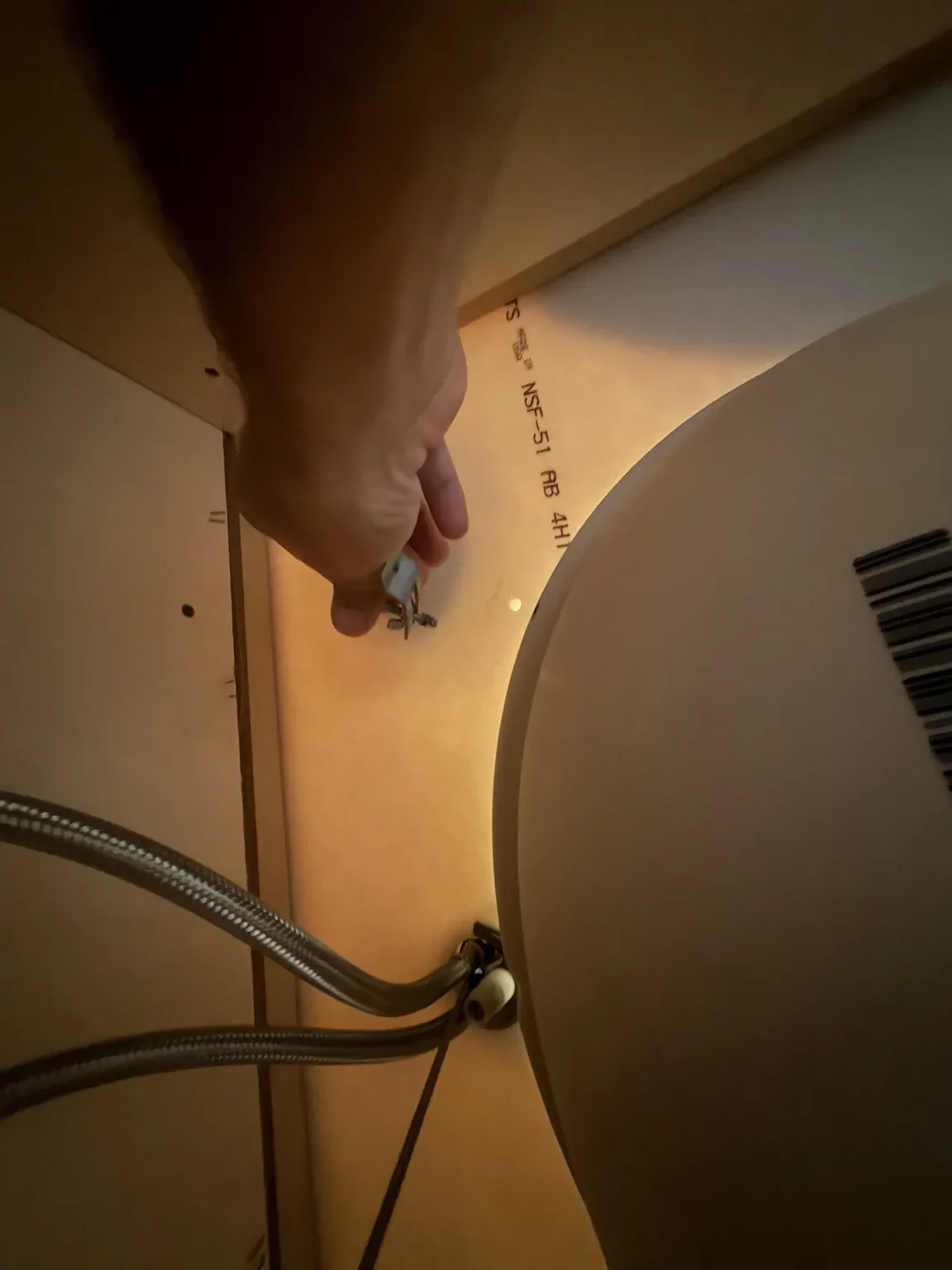
- The shutoff valves and flexible supply hoses, without pulling on them.
- Any disposer, dishwasher hose or drinking-water system inside the cabinet.
- A closer view of the first visible moisture and any staining, swelling or damaged shelf.
- The route into the room and any access restriction that affects the work.
Describe the timing, not just the puddle
Water that appeared after a basin emptied suggests a different starting point from moisture that continued while the fixture was unused. A supply connection, drain joint, faucet, appliance connection or treatment system may each need a separate check. Timing helps direct that check; it does not settle the diagnosis.
Note when you first saw the water, whether it has returned, what was running and whether the shutoff changed it. Tell the technician about recent fixture work, a slow drain or any product added to clear it. A photo helps plan access but cannot verify every hidden connection or rule out water arriving from elsewhere.
Plan the repair and the cabinet care together
Ask what must be removed to reach the confirmed problem and how the shelf, flooring and adjacent finishes will be protected. A plumbing repair and drying or replacing damaged cabinetry are separate tasks; clarify who handles each.
After the source is repaired, ask how it was tested and what to watch for. A moisture alarm can alert you to future water in a vulnerable spot, but it does not fix the leak or replace inspection. If the cause is concealed or the wet area extends beyond the cabinet, discuss a separate investigation rather than assuming a trap replacement will solve it.
Sources and scope
This guide combines Drain Doctors service planning with the primary references below. Utility guidance from other cities explains general pipe conditions; local responsibility, approvals and requirements must be checked for the property. It is not an on-site diagnosis.