
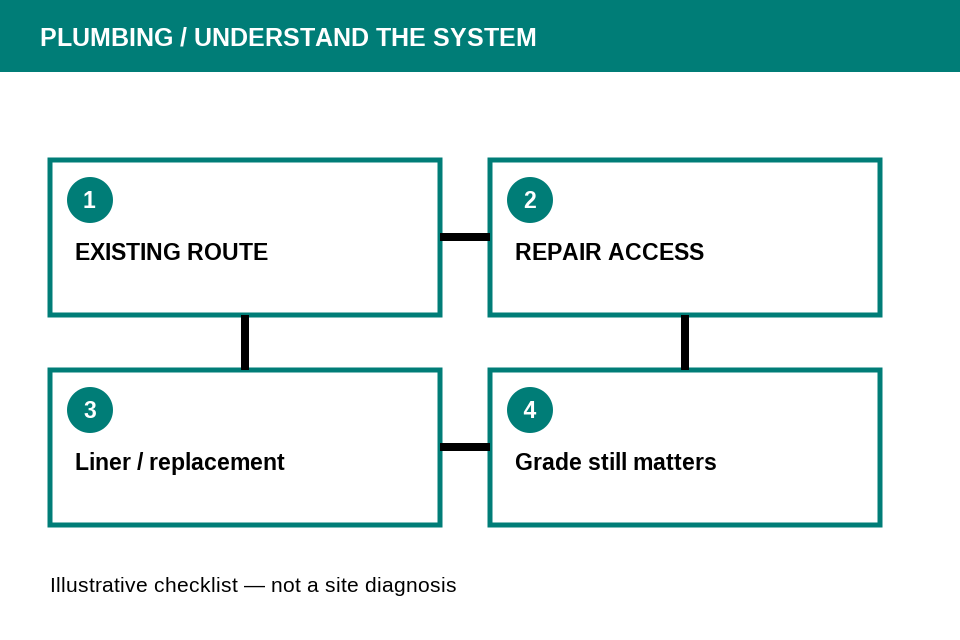
Lining and pipe bursting do different work
Cured-in-place pipe lining forms a new lining inside an existing pipe after preparation. It relies on a suitable route and proper treatment of connections. Ask which sections will be lined and how the condition of the host pipe has been evaluated.
Pipe bursting breaks the existing pipe while drawing a replacement along its route. Access pits and connection work are still part of the method. It should not be sold as a promise that no ground, paving or landscaping will be disturbed.
Some problems require direct access
Excavation can expose a damaged section so it can be removed and replaced. Sometimes a targeted excavation is part of an otherwise trenchless project: for example, a section may need preparation or repair before the selected method can proceed.
Grade deserves a separate conversation. Following an existing route does not automatically correct a low spot. Ask how a proposed method changes—or preserves—the alignment and slope that caused the concern. If the recommendation is excavation, ask which measured or observed condition makes direct access appropriate.
A useful proposal answers these questions
Local requirements and ownership boundaries must be checked for the actual address and work area. A method permitted somewhere else is not automatic authorization to work in your street or connect to the local public sewer.
- What footage and condition assessment support this method?
- Where are the start, finish, access pits and connections?
- How will nearby utilities and the home be protected?
- What water-use interruption should the household plan for?
- Which permits, approvals and inspections apply to this property?
- What is included in restoring soil, paving, flooring and landscaping?
Define the finished result
Ask how the team will check the completed pipe and provide records of the work. The scope should state how connections are handled and how any remaining defects or uninspected sections will be documented.
Compare proposals that cover the same outcome. One may include access, testing and restoration while another prices only the pipe work. A smaller, well-supported repair may be sensible; a longer replacement may be justified by different evidence. The decision should follow the condition and your priorities for the property, with the limitations explained before approval.
Sources and scope
This guide combines Drain Doctors service planning with the primary references below. Utility guidance from other cities explains general pipe conditions; local responsibility, approvals and requirements must be checked for the property. It is not an on-site diagnosis.