
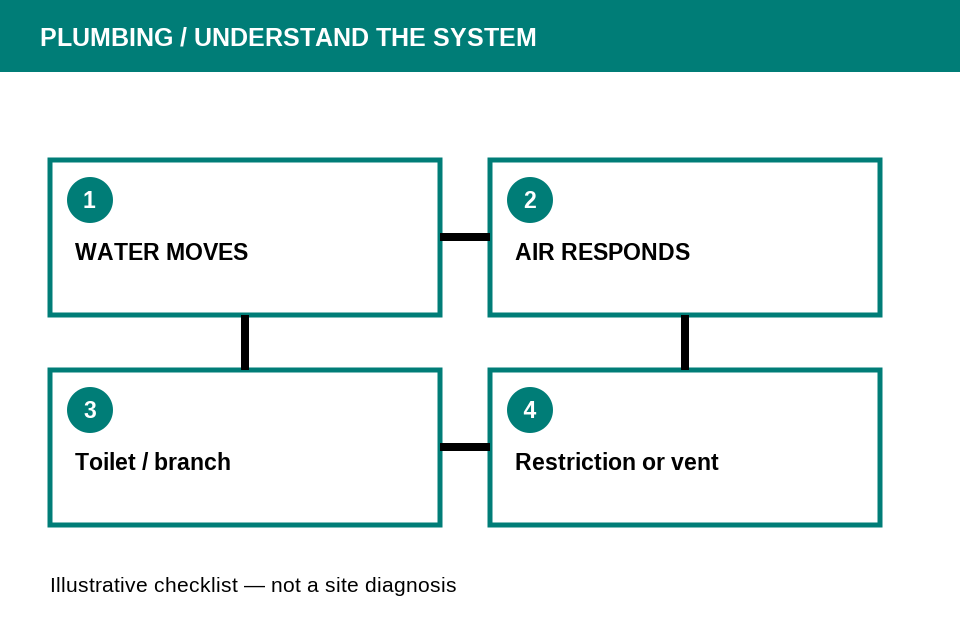
Water flow and air pressure work together
The drainage system needs a route for wastewater and a way to manage air pressure. Plumbing vents help keep pressure balanced. If that balance is disturbed, air may move through a fixture instead, producing bubbles or changes in the bowl’s water level.
A washing machine releases water in a noticeable burst, so its discharge can reveal a problem that a brief hand-washing session does not. That timing is useful to report. It does not, by itself, prove that the washing machine, toilet, vent or main sewer is at fault.
Separate a noise from an active backup
Municipal sewer cleaning can temporarily affect air pressure in connected plumbing. That is one possible context, not an explanation to assume whenever a toilet gurgles. Persistent symptoms during ordinary household use still need attention.
- Bubbles without overflow: record what appliance or fixture was draining and whether it happens repeatedly.
- Bubbles plus slow drainage: report all affected fixtures, including rooms that seem unrelated.
- Water rising in a shower or toilet: stop avoidable water use and arrange prompt assessment.
- Odor with changing water levels: include both observations in your report.
- Noise during utility sewer cleaning: tell the utility if the change began with nearby maintenance.
Check the cause before choosing the cure
Ask the technician to explain what supports a drain restriction, venting fault or receiving-system problem. Clearing a pipe and repairing a vent address different causes. A camera may help evaluate an accessible wastewater route, but it is not a substitute for assessing the rest of the plumbing when the evidence points there.
Do not climb onto the roof or put a hose down a vent to test a theory. Also avoid repeatedly flushing a toilet that is already reacting to a suspected blockage. A short description of the normal-use sequence is safer and often more useful than repeated experiments.
What to send with an inquiry
Tell us which fixture triggers the bubbling, where you hear it, whether the toilet level rises or falls, and whether any water returns through another drain. Mention recent plumbing work, prior drain cleaning, known septic service and any municipal maintenance notice.
Keep the distinction between an observation and a conclusion: “The toilet bubbles when the washer empties” is more helpful than “the vent is blocked” unless a professional has verified that diagnosis. The next step should be chosen from the evidence, with an explanation you can understand.
Sources and scope
This guide combines Drain Doctors service planning with the primary references below. Utility guidance from other cities explains general pipe conditions; local responsibility, approvals and requirements must be checked for the property. It is not an on-site diagnosis.