
Separate the house pipe from the receiving system
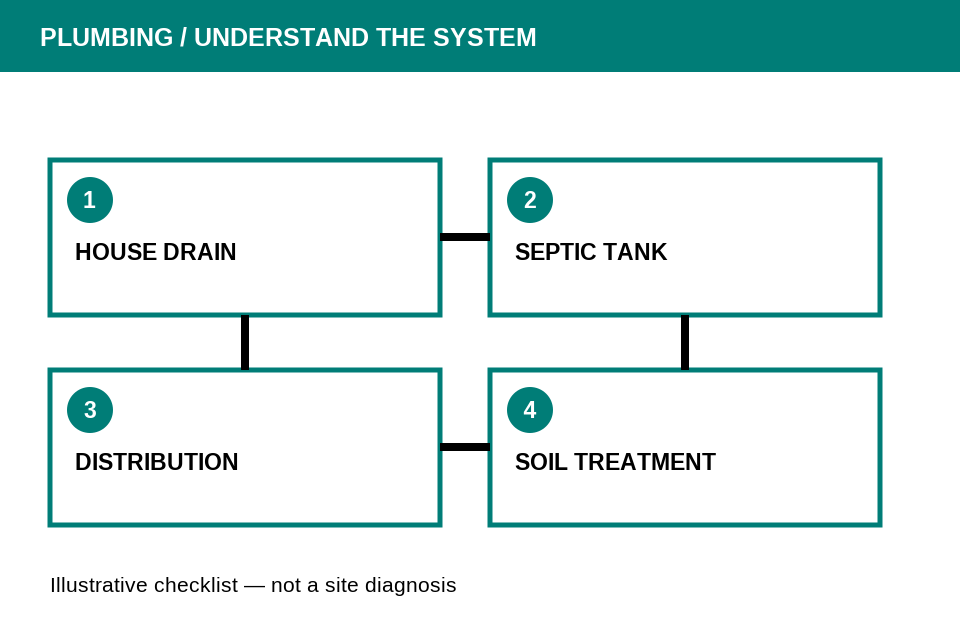
In a typical septic system, household wastewater reaches a tank, solids separate, and liquid continues to a treatment or dispersal area. A restriction or hydraulic problem after the house pipe can affect drainage even when that pipe appears clear.
The exact arrangement matters. Obtain the system plan and maintenance records if available. Do not assume a conventional gravity drainfield when the property may use pumps or another treatment design. Give the service provider the actual history rather than only the date of the last drain cleaning.
Useful observations to report
None of these observations alone proves that the drainfield has failed. They help determine which components to assess and whether urgent action is needed. Avoid repeatedly running water to test a system that is already backing up.
- Which fixtures back up and whether the problem affects the whole home.
- The date of the last tank inspection or pumping and any reported findings.
- Any alarm, power interruption or known pump problem.
- Unusual wet areas, odors or surfacing wastewater near the system, observed from a safe distance.
- Recent unusually heavy household water use or prolonged wet conditions.
An inspection should go beyond a quick clearing
A qualified septic provider may examine the tank condition, solids levels, inlet and outlet, filter and connected components appropriate to the design. Pumps, controls and distribution arrangements need attention where present. The assessment should also consider whether the receiving soil area is accepting water.
Ask what the inspection establishes and what remains untested. If pumping is recommended, ask what it will address and what follow-up is needed. Removing tank contents may be necessary maintenance, but it does not by itself repair broken components or establish that the dispersal system is healthy.
Protect the household and keep a record
Reduce avoidable water use during a backup and keep people and pets away from wastewater or suspect wet areas. Do not open or enter septic tanks, lean into access openings or attempt pump and electrical repairs yourself. Arrange qualified help and contact the relevant local health authority when contamination is present.
Keep inspection results, pumping records, measurements and recommendations together. A maintenance schedule should reflect the system and its use. Ask separately about Drain Doctors Orange County availability and the work it can provide; the inquiry should identify that the home uses septic so the next step is routed appropriately.
Sources and scope
This guide combines Drain Doctors service planning with the primary references below. Utility guidance from other cities explains general pipe conditions; local responsibility, approvals and requirements must be checked for the property. It is not an on-site diagnosis.