
Identify the finding accurately
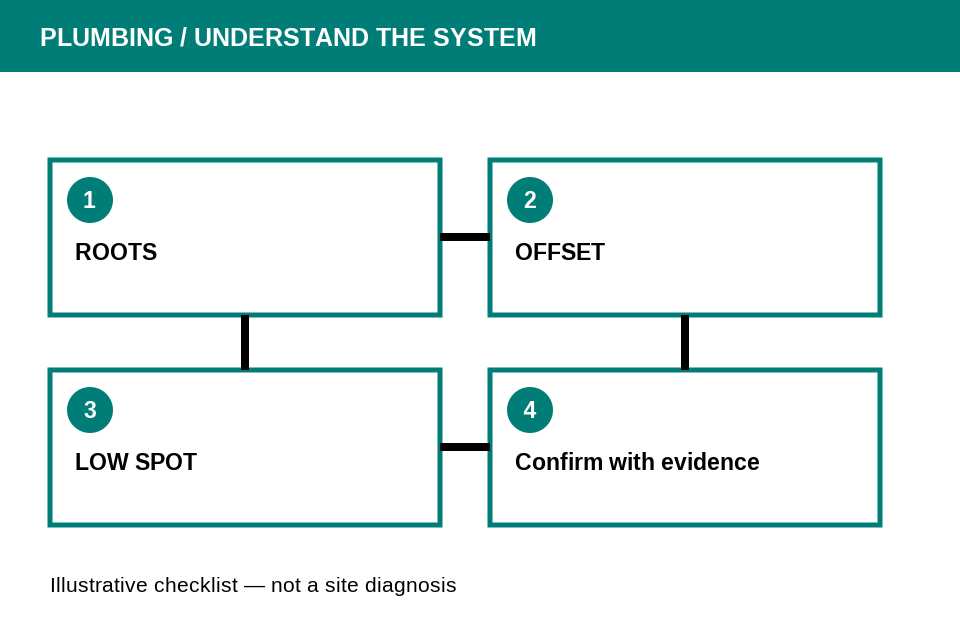
Roots can enter through openings and then trap waste. Removing roots may restore flow while leaving the entry point unchanged. An offset and a root intrusion can exist together, but they should not be described as the same defect.
- Roots: determine where they enter and how much they restrict the usable pipe.
- Offset joint: identify the misalignment and whether it catches material or exposes surrounding soil.
- Crack, break or missing pipe: show the affected section and the visible severity.
- Low spot or sag: document the water-retaining section and its effect on performance.
Use a sequence of evidence
The investigation should connect the symptoms to the inspected route. After sufficient cleaning for visibility, a camera can document what is visible. The technician should identify where a finding begins and ends, note anything that prevents inspection, and explain whether locating or other measurements are needed.
A camera dipping into water does not, by itself, quantify the entire pipe’s grade or establish why water is present. Ask whether downstream restriction, normal flow during inspection or a persistent low area has been distinguished. Avoid accepting a repair scope based only on an unexplained still image.
Severity and history change the decision
Public-utility condition guides distinguish lesser defects that may be monitored from conditions that affect operation or merit repair. That is a useful principle, not a substitute for an assessment of your particular pipe or the requirements of its authority.
Ask whether the line repeatedly blocks at the documented location, whether cleaning is becoming less effective, and whether the condition has changed since an earlier inspection. A recommendation should explain the consequences of monitoring, maintaining or repairing—not imply that every older pipe has the same risk.
Match the repair to the problem
For each option, ask which defect it resolves and which conditions remain. A root-maintenance plan should explain the ongoing entry issue. A spot repair should define its limits. A lining or replacement proposal should address connections, changes in direction and any slope concern rather than presenting “trenchless” as a universal answer.
Request a written scope with pipe locations, access areas, property protection, testing or inspection, and restoration responsibilities. Keep the video and any marked locations. You should be able to point to the finding that makes the proposed work useful and understand how the completed work will be checked.
Sources and scope
This guide combines Drain Doctors service planning with the primary references below. Utility guidance from other cities explains general pipe conditions; local responsibility, approvals and requirements must be checked for the property. It is not an on-site diagnosis.