
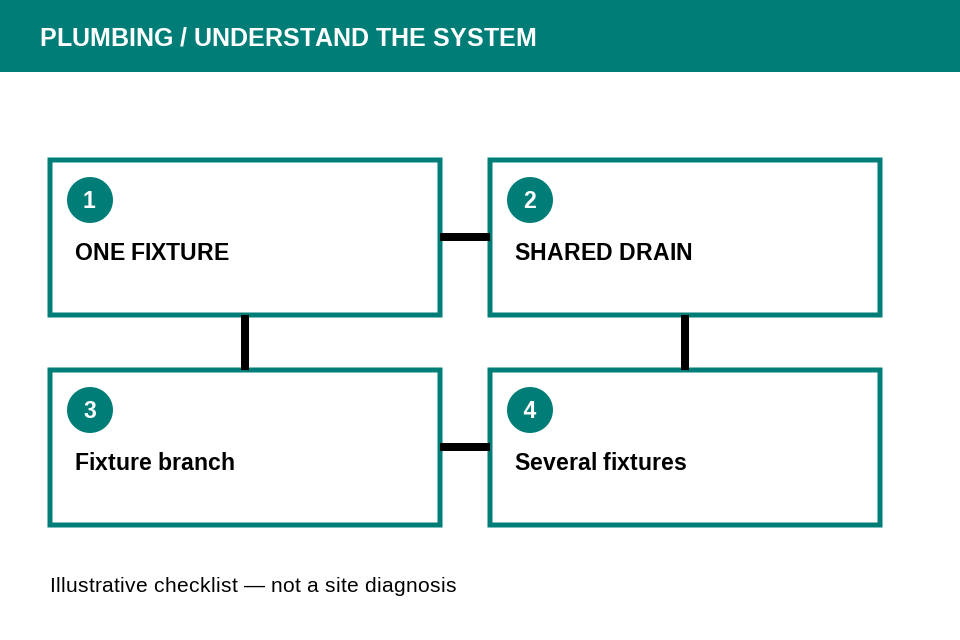
Start with what you can observe safely
A slow bathroom sink while the shower and toilet work normally is a different report from a toilet flush making water rise in the shower. In the second case, those fixtures may share a restricted route downstream. The place where water appears is not necessarily where the blockage is located.
Do not deliberately run several fixtures to reproduce an active overflow. Use what you already observed. If a backup is occurring, stop laundry, dishwashing and other avoidable water use until someone assesses the situation.
Describe the pattern, not a guessed diagnosis
These are investigation clues. A nearby branch can serve more than one room, and a property may have unusual routing, a shared sewer, a pump or an onsite septic system. A floor plan alone does not reveal every pipe connection.
- One fixture: name it and explain whether it drains slowly, stops completely or leaks nearby.
- Several fixtures in one bathroom: identify which use causes another fixture to react.
- Fixtures in different rooms: describe the order in which trouble started.
- Lowest shower or floor drain: report what other water use preceded the rising water.
- Neighbors or a street overflow: tell the local wastewater utility; do not enter or open a public manhole.
What an assessment should distinguish
Ask which part of the route has actually been tested or inspected: the fixture connection, an interior branch, the building sewer, or the receiving system. If the evidence suggests a public-side problem, the responsible utility needs to assess its system. Responsibility boundaries vary; do not assume they always end at the curb.
For a septic-served property, a clear house drain still leaves the tank, outlet and dispersal system to consider. For a sewer-connected property, a localized private blockage and a restriction in a public main require different responses. The report should say what is known and what remains unverified.
Prepare information that makes the visit useful
Provide the address, affected rooms, whether the home uses sewer or septic, previous stoppages, and known cleanout locations. A short video taken from a dry, safe position can show the sequence without repeatedly running water. Share earlier inspection footage if it exists.
Keep away from wastewater and avoid moving contaminated items through the home. Arrange help appropriate to an active backup rather than waiting for an online inquiry to be answered. Drain Doctors Orange County inquiries are for availability confirmation while branch arrangements are being completed.
Sources and scope
This guide combines Drain Doctors service planning with the primary references below. Utility guidance from other cities explains general pipe conditions; local responsibility, approvals and requirements must be checked for the property. It is not an on-site diagnosis.