
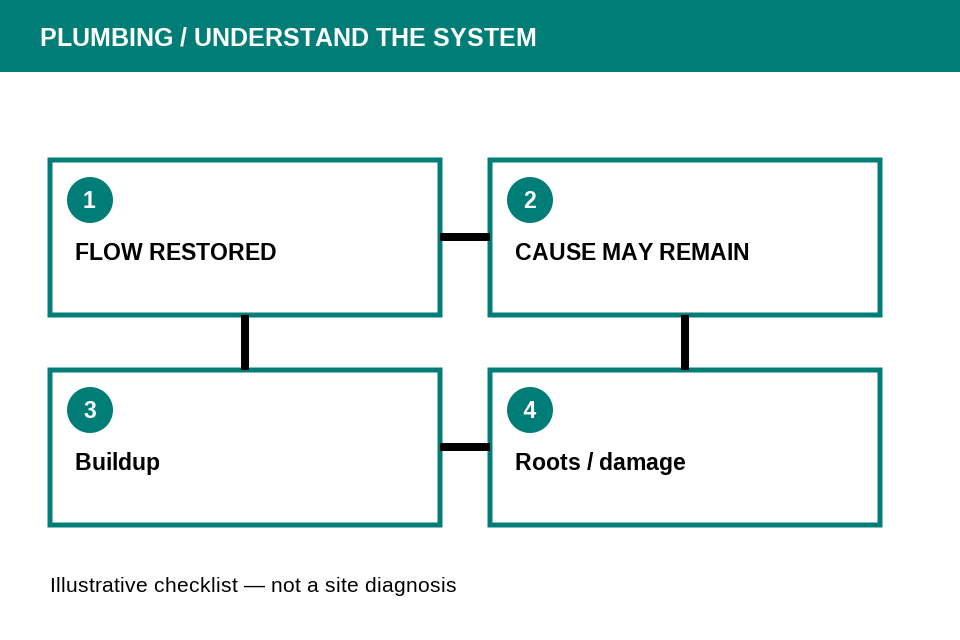
A cleared blockage and a repaired pipe are different outcomes
Mechanical cable tools can break up or remove obstructions. The result depends on the access, pipe size, tool and material encountered. Roots or grease do not all call for the same attachment or cleaning method. Ask what was found and what the technician was able to clear.
Cleaning does not realign an offset joint or correct a low section of pipe. Where a structural problem contributes to repeated stoppages, its condition and effect on flow should guide a repair discussion. Equally, an old pipe should not be condemned simply because it is old.
The timing is useful evidence
Tell the next technician whether the drain never returned to normal, slowed again the next day, or worked well for months. Note whether it is the same fixture, a group of fixtures, or the lowest shower that reacts when another appliance empties. These observations help narrow the investigation; they cannot identify the exact defect alone.
- Keep the previous invoice, footage and any marked location.
- Record which fixtures are affected and what was running when the backup occurred.
- Share known pipe repairs, root problems and any drain product already used.
- Explain whether the trouble follows large water use or rain, without assuming either is the cause.
Ask for evidence before choosing the next method
A camera inspection can be useful after enough flow is restored to see the pipe interior. Ask for a recording, the inspected route, any sections that could not be viewed, and an explanation tied to the images. A diagnosis should distinguish material in the pipe from damage to the pipe.
If more cleaning is proposed, ask what it is intended to remove. If a repair is proposed, ask which finding makes that repair useful and whether a smaller repair or a maintenance approach is reasonable. The aim is an explained next step, with its limits, rather than repeatedly buying the same unexplained procedure.
While you arrange an assessment
Reduce water use if wastewater is backing up, and keep people and pets away from affected areas. Do not keep flushing to test a blocked system. Avoid adding drain chemicals while the cause is uncertain, and tell the technician about any already present.
Once the line is working, keep fats, oils, wipes and other nonflushable waste out of it. A maintenance interval should follow the actual findings and history; there is no single schedule that fixes every recurring drain problem.
Sources and scope
This guide combines Drain Doctors service planning with the primary references below. Utility guidance from other cities explains general pipe conditions; local responsibility, approvals and requirements must be checked for the property. It is not an on-site diagnosis.